Thursday, September 15, 2011

Wine-Ware with Arthur Court Designs: Alternative Metal Ware

I came across this artist, Arthur Court Designs, while traveling through Florida.  The pieces were quite catchy and reasonably priced.  What's great is that each hand-made piece is something for your dinner table.  I loved the Grape Leaf Collection!

While browsing through their webpage, I found that this husband and wife pair are artists in San Francisco, California.  Not too far from Wine Country!  However, all of their pieces are inspired by nature, and they have made a commitment towards being a Green company.  Kudos to them and their art.  I hope you enjoy!  All photos are from Arthur Court Designs.

My favorite piece: Grape 3-Leaf Server

Grape Leaf Serving Platter

Grape Leaf Oblong Serving Tray

Grape Cheese Servers

Grape Sugar and Creamer Set
I just thought this was cool: Savannah Stand with Acrylic Bowl

Wednesday, September 14, 2011

What's in My Glass Wednesdays! 2009 Reserve Gewurztraminer by Nimble Hill Vineyard & Winery

Another fabulous Pennsylvania wine that deserves some recognition!  There's several wine treasures in the Scranton area along with a beautiful backdrop of fresh water streams and endless hills and mountains of trees.  It's simply gorgeous in the summer time, and I'm sure the winters are breathtaking.  If you're up towards the Poconos, make sure you stop by some of the local wineries.  They will be sure to please!

2009 Reserve Gewurztraminer by Nimble Hill Vineyard and Winery

(Photos from Nimble Hill's website)

The D-2010 Scale 

2009 Reserve Gewurztraminer by Nimble Hill Vineyard & Winery (Pennsylvania)
Appearance (10 points possible): pale yellow, almost white in color, complete clear - 10 points
Aroma/Bouquet (20 points possible): Spicy, citrus, slight strawberry, canned pineapple, tropical fruit, guava, and floral. - 20 points
Taste (10 points possible):  Very light on the palate and all up front.  The finish is this falls short and is slightly overwhelmed by the 13.6% alcohol.  Lots of pineapple and spice on the palate with a floral aftertaste.  Light bodied and delicate, with a slight hint of astringency.  - 7 points
Balance (5 points possible): The wine is slightly disintegrated, but again, I believe this is to the dominating alcohol with the fruit.  - 3 points
Finish (5 points possible):  Finish is short and quick, with a slight ethanol burn.  Leaves a lingering hint of floral characters on the palate and a touch of spice, which is common with Gewurz. - 3 points
Packaging *Introduction to the D-2010 Scale*
Quality of Package (5 points possible):  Beautiful aromatic white bottle with a synthetic cork.  For this wine, I think the cork choice is appropriate. - 4 points
Label Marketability (10 points possible):  Nimble Hill's traditional label is meant to incorporate all the surrounding farms and neighbors of Nimble Hill's vineyard and production site.  It's not overly flashy, but very classy.  I truthfully like the story behind the label.  It emphasizes the "drink local" mentality that is quite important in today's market.  I wish I would've grabbed a picture of this label! - 7 points
Other (5 points possible): There's nothing extra about the package, although it looks very nice in a wine basket with some of the other well made aromatic white varieties. - 3 points
Total Points: 87 points
Overall Thought: My only disappointment in this wine is that the grapes are sourced from New York and not Pennsylvania.  Although the production area for this winery is very close to New York state so it makes sense to source some of their grapes from a bit farther north.  Regardless, the Gewurz is quite pleasant, and compared to the 2010, I enjoy the delicate nature of the 2009 vintage year.  For those that enjoy a heavier, meatier Gewurz, the 2010 would be your pick.
Food Pairings:  This is a good Thai or spicy food wine.  It would also pair well with seafood and shellfish.
Cost: The 2009 is almost sold out, but the 2010 is $16
Splurge Factor (out of 4): 1 - for this wine and it's quality, you are getting a good deal.
Where to buy:  Nimble Hill has 2 tasting rooms in the Scranton area, but their wine is also served at several restaurants throughout Pennsylvania.  For a full listing of where to buy Nimble Hill wines, please visit their website.  Cheers!


Tuesday, September 13, 2011

Wine Fashion: Wine Aprons

I saw these fun, cute, and fashionable aprons while looking for a birthday present for a very dear friend of mine.  I absolutely love the pink funness of these aprons with the snappy wine reference!  Now you can look charming while cooking and keep a glass of wine in hand!  :)


Pink Wine Apron

I don't own a wine apron, but I do like to cook with one!
(Photos by author and her little brother)

Monday, September 12, 2011

Remembering 9-11: Windows on the World

After watching several specials reflecting upon the September 11th attacks, in addition to hearing all the family members of the victims expressing such sadness, I thought it was only appropriate to recognize the pain and healing of our American people.  My deepest sympathies go out to the families and friends of all the victims. I am reminded every year at this time to be thankful for every day that we have together. 

It is interesting to note the number of lives that the 9-11 attacks touched.  People from all around the world were effected.  One of the most stunning realizations one can have is how each victim had a family, a life, and a story...  Below is one such story that I learned through my wine education over these past 10 years.

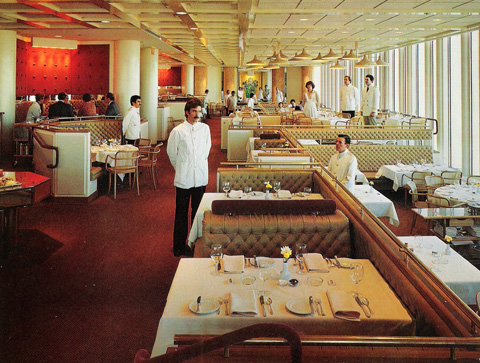
I myself had never been to the World Trade Center.  I remember staring at in the few times I traveled to New York City.  But it was 5 years after the World Trade Center had been attacked that I found out there had been a wine cellar and restaurant in the North Tower.  I learned this with the mandatory reading in one of my graduate classes, Windows on the World by Kevin Zraly.

Kevin Zraly's Windows on the World: Complete Wine Course book
(Photo from Google Images)

File:Windows on the world logo.png
Windows on the World Restaurant Logo
(Photo from Wikipedia)

The introduction to the book explained what had been the Windows on the World restaurant in addition to a tribute to those that lost their lives on September 11, 2001.  Windows on the World was located on 106th and 107th floors of the North Tower.  At the time of the attacks, Windows on the World was serving breakfast, and all employees were present during the first plane crash.  All people in the restaurant survived the initial crash by Flight 11, but all eventually died due to smoke inhalation, jumping from the building after the attack, or during the building's final collapse.  The acting manager at the time was one of the individuals who's initial calls were recorded to authorities and was the last communication the restaurant had with the outside world.  There were 72 restaurant employees,  16 Risk Water employees, and 76 guests that lost their lives on September 11, 2001 due to the terrorist attacks.  It has been speculated that one of the famous photographs of that day, "The Falling Man," which to me is one of the most painful photos to have seen, was one of the restaurant's employees.


Windows on the World Restaurant 
(Photos from Google Images)

Since the time of the attacks, previous employees of Windows on the World that survived the September 11th attacks opened COLORS in Manhatten. The restaurant serves as a tribute to those that lost their lives on that day.  The menu reflects "culinary traditions from 22 countries" where all of the former's restaurants employees came from.  


COLORS Restaurant
(Photos from Google Images)

Remember to cherish each day.  Love each of those individuals that have touched your lives.  And never forget the victims of 9-11...


In Remembrance and Recognition of Those That Lost Their Lives
and of Those That Fight For Ours
(Photos from Google Images)

Friday, September 9, 2011

Friday Wine News You Can Use: Restaurants in New York with Under $50 Wines on Wine Lists

Traveling to New York?  Perhaps you should check out some of these restaurants with affordable wines!

This article was originally posted by the New York Times.  It is pasted here for your convenience.


Restaurant Bottles From the Bottom Up

IT’S a challenge for restaurants to offer exciting lists of expensive or even moderately expensive wines. It’s a far greater challenge for restaurants to offer a wide selection of captivating, inexpensive wines. It requires creativity, thoughtfulness and dedication to gather wines that may not return as big a profit as the more expensive choices on the list.


Rather than judge a restaurant by what it offers at the high end, I decided to examine wine lists from the bottom up, by evaluating their bottle selections at $50 or less. Now, $50 a bottle is not cheap. But practically speaking, the best retail values these days are in the $17 to $25 range. If you follow the conventional formula for restaurant pricing of doubling the retail price, you have a list that can offer very good values at $50 and under.
New York overflows with great lists. I’ll admit: selecting the 10 best at $50 and under was not easy. Some restaurants that I thought would be shoo-ins, like Casa Mono or Trestle on Tenth, have their greatest values at a slightly more expensive level. Nice Matin offers great inexpensive choices, but I disqualified it because I had recently written about its wine list. And the sheer profusion of Italian choices meant some would be left by the wayside. Here, then, is my somewhat arbitrary list, in alphabetical order.
ALTA, 64 West 10th Street, (212) 505-7777. This Mediterranean restaurant offers a wide range of excellent low-end European selections. Highlights include fine rosés and dynamic whites, like the 2001 Viña Gravonia Rioja from R. Lopéz de Heredia ($47) and the 2009 kerner from Abbazia di Novacella in Alto Adige($35). Red choices are more limited but include a good Saumur Château Fouquet 2007 from Filliatreau ($43) and a 2008 Valtellina Grumello from Aldo Rainoldi ($40).
BUTTERMILK CHANNEL, 524 Court Street (Huntington Street), Carroll Gardens, Brooklyn, (718) 852-8490. Lost faith in American wines? Buttermilk Channel has an excellent all-American list, with many good values, including a rosé sparkling wine from Gruet in New Mexico ($36), a tangy blend of grenache blanc and vermentino from Donkey and Goat in the Sierra Foothills in California ($40) and a delicious 2009 Bone-Jolly gamay noir from Edmunds St. John, also from the Sierra Foothills ($36).
FRANKIES SPUNTINO, 457 Court Street (Luquer Street), Carroll Gardens, Brooklyn, (718) 403-0033. A casual Italian spot with a great Italian list. The depth is in reds, including the excellent 2008 Foradori teroldego from Trentino ($50); the light, lively 2009 frappato from Valle Dell’Acate in Sicily ($45), and the 2008 Barbera d’Alba from Oddero ($39).
FRANNY’S, 295 Flatbush Avenue (Prospect Place), Prospect Heights, Brooklyn, (718) 230-0221. Great pizza and a terrific wine list with great esoteric whites like a lively floral 2009 Ermes Pavese Blanc de Morgex et de la Salle from the Vallée d’Aoste ($45) and the highly unusual 2009 blaterle, a nearly extinct grape from Alto Adige from Nusserhof ($50). Top reds include the Occhipinti SP68, a nervy Sicilian blend ($50).
GRAMERCY TAVERN, 42 East 20th Street, (212) 477-0777. Gramercy Tavern, one of the most expensive restaurants in New York? Yes! The list is brilliant from bottom to top, with great low-end choices like Préambulles, a striking, funky, sparkling wine from Causse-Marines in the southwest of France ($44); the excellent 2010 chenin blanc from Paumanok on the North Fork of Long Island ($44); the minerally 2010 Sigalas assyrtiko from Santorini ($48), and the delicious 2008 gamay from Grosjean in the Vallée d’Aoste ($40). The choices go on and on.
JUNOON, 27 West 24th Street, (212) 490-2100. An Indian restaurant with an extensive wine list is a great treat. Wonderful choices include some with a fighting chance of going with Indian food, like a 2009 Muscadet Clos des Briords from Pepière ($42), the unusual 2008 rkatsiteli from Dr. Konstantin Frank in the Finger Lakes ($45) and a superb 2008 dolcetto from Abbona ($39).
OSTERIA MORINI, 218 Lafayette Street, (212) 965-8777. The theme of the food andwine here is Emilia-Romagna, with a special nod to the dry, earthy, sparkly reds of Lambrusco. Why go anywhere else, especially with a half-dozen or more Lambruschi available for less than $50? Orvieto, like Lambrusco, has been maligned, probably fairly so. For a fresh take, how about a minerally 2010 Orvieto Terre Vineate from Palazzone ($34)? And for something completely different, try the 2007 Pignoletto Spungola Bellaria from Alberto Tedeschi, an unusual, apple-and-flower scented, orange-hued white ($45).
ROMAN’S, 243 DeKalb Avenue (Vanderbilt Avenue), Fort Greene, Brooklyn, (718) 622-5300. Brooklyn? Check. Beards? Check. Trilby hats? Check. No reservations? Check. Wine? The beautifully chosen list almost makes everything else tolerable, with whites like the 2009 tocai from the great Slovenian producer Movia ($36) and the subtle, savory 2009 Golfo del Tigullio from Bisson in Liguria ($45). Reds might include the superb 2008 Côte de Brouilly from Château Thivin ($38) and the bracing 2009 Barbera d’Alba from De Forville ($42).
ROUGE TOMATE, 10 East 60th Street, (646) 237-8977. This airy spa-like restaurant offers one of the most extensively intriguing lists in New York, with brilliant choices that can either be esoteric or mainstream. A slightly sweet, sparkling rosé Cerdon du Bugey from the Savoie, like the 2009 from Renardat-Fâche ($40), makes a delicious aperitif. Other great offbeat selections include the 2007 Tokaji Sec from Kiralyudvar, a wonderful dry white ($47), and the earthy, structured red from Monje in the Canary Islands ($48).
VINEGAR HILL HOUSE, 72 Hudson Avenue (Water Street), Brooklyn, (718) 522-1018. Another Brooklyn outpost that takes no reservations. If you’re waiting, here aresome excellent bottles to try. Among the whites, the fine 2010 albariño Igrexario de Saiar from Benito Santos ($35) and the delicious 2007 Jurançon Sec Cuvée Marie from Charles Hours ($47). From the red side, the superb 2007 Irouléguy from Domaine Ilarria ($43) and the mouthwatering 2008 Cerasuolo di Vittoria from Valle Dell’Acate ($40). Don’t worry, more choices await when you are finally seated.
A version of this article appeared in print on September 7, 2011, on page D3 of the New York edition with the headline: Restaurant Bottles From the Bottom Up.

Thursday, September 8, 2011

Looking for Surprises... Not Expensive Wines

There is a lot of news this week in posts - I apologize.  But there's a lot of good things that I saw published throughout the wine world that I thought needed recognizing.  For example, this article that came from Matt Kramer at Wine Spectator.  I should note that I religiously stay away from Wine Spectator (for many, many personal reasons that I will not bore you with right now), but this article caught my eye.

I think this is how I've felt about wine since I started drinking it.  After awhile, drinking the same old wine gets somewhat blase.  Of course, there are those "old dependables" that I purchase when I know I need something for a specific occasion, but really, it's all about the element of surprise: something you can sit there and say, "wow" to.  In fact, I think it's somewhat ruined the way I look at food.  Now, I'm always looking for food to excite me.  We don't have enough of this in America, I think.  We've forgotten how things taste, how they make us feel, what they really smell and look like.  There's something about tasting for the first the time and being amazed... which is probably why I continue to drink wine... to continuously find that amazement.

I'm not saying we should all go out there and buy the cheapest bottle of wine around.  I'm just arguing against all those out there who spend their life savings on wine every year.  :)

This article was originally posted by Wine Spectator.  It is posted here for your convenience.

(Photo from Google Images)

Why I No Longer Buy Expensive Wine

And no, it's not because of the money
Matt Kramer
Posted: September 6, 2011
Recently, I did something that I have done exceedingly rarely in my wine-buying life: I sold some wine. Now for some wine drinkers, buying and selling wine is normal. A lot of Bordeaux buyers engage in this as a matter of course.
But that's never been the way for me. Over decades I've lovingly—and occasionally expensively—built a wine collection that has given me daily satisfaction. Until now, it never occurred to me to sell. Quite the opposite: It always occurred to me to buy. I've always loved buying wine. Selling them was unthinkable. I wanted to marry these wines, not just have a little fling, only to toss them aside for a new fancy.

So why then am I now selling wine? It's not because of the money, although that's always nice to have. Like everyone else, I can always use a little spare change.

I should mention that the wines I sold were among the most expensive in my cellar, rarities that truthfully I could barely afford to buy, but I could not bring myself to resist. They were among the greatest wines in my cellar.

So why did I sell? The answer lies in a single word: surprise.

Perhaps it's a stage in a long wine life, but what I now seek from wine, more than anything else, is the element of surprise. The novelist Henry James captured this perfectly: "There are two kinds of taste, the taste for emotions of surprise and the taste for emotions of recognition."

Today, more than ever before, I find myself with an almost urgent taste for emotions of surprise. Expensive wines rarely offer that element of surprise for me anymore.

Mind you, I'm not saying that expensive wines aren't great. Or that they're not wonderful. Or that they're not worth the money. But if you've been around the wine block a few times, they rarely surprise. You have a good idea of just what expensive wines are likely to deliver. Can they be thrilling? You bet. Are they intensely enjoyable? No doubt. But are you surprised? I doubt it.

Expensive wines, almost by definition, are known entities. They come from famous places, famous vineyards, famous producers. They are sanctified by tradition and endorsed by generations of wine lovers. They repeat their greatness over many vintages. (I'm speaking here, of course, of true classics, rather than one or another cult wine that skitters into the price stratosphere because of points awarded by one or another wine critic. Revealingly, there's no element of surprise with these wines. They're utterly predictable.)

Expensive wines rarely surprise. But modestly priced wines—the best of them, anyway—are endlessly surprising. 

Why is this? Largely because we have no expectations from such wines. They are either wholly new to us or they offer new levels of achievement in zones previously unrecognized for anything special.

I'll give you an example. When I was in Melbourne, Australia, last fall I tasted a red wine blend from Australia's Margaret River district. Now, I've been to Margaret River and I know perfectly well that it is a place of great potential and ever-increasing achievement. Still, when I tasted the 2009 Cullen Mangan Vineyard (a blend of mostly Malbec with some Petit Verdot and Merlot) I was bowled over.

This wine was not merely a surprise, it was a revelation. It is an extraordinary red wine by anybody's measure, anywhere. The price? $42 in Australia. I grant you that 42 bucks is not cheap. But by today's high-priced wine standards, $42 is far from outrageous, especially for a wine of soaring quality.

You should know, however, that the wines I'm buying today are much less expensive than that. For example, I recently picked up a case of 2008 Domaine Bruno Dufeu Bourgueil Cuvée Grand Mont, a stunning Loire Valley Cabernet Franc crafted from 50-year-old vines. Cost? $15 a bottle—and that was before the case discount. This wine offered an element of surprise that wines 10 times the cost do not provide.

Two weeks ago I purchased two cases of a Spanish cava that astonishes everyone to whom I serve it. Torre Oria Brut is 100 percent Macabeo, a white grape variety I'd never previously experienced as a sparkling wine until I came across this bottling last year (it was one of my Wines of the Year in 2010). It gratifies everyone—even Champagne fans—with its depth of flavor and lemon-tinged richness. Cost? $8.50 a bottle. The surprise is, as the credit card advertisement puts it, priceless.

Obviously, a low price alone isn't enough. The real surprise lies in finding remarkable quality—and then looking at the low price. Of course neither of these surprises happens with expensive wines, where too often the only surprise is, "Is that all there is?" This is not the surprise you're seeking.

Today's wine world is radically different from the one I entered 35 years ago, when I began writing about wine. Few surprises were then available, as most wines of quality came from long-established and highly regarded districts.
Today it's the reverse. The majority of the world's most interesting wines now come from "unknown," or at least unheralded, locales. Collectively, their numbers far outstrip the relatively small pool of famous zones commanding high prices. To call this a revolution understates it considerably.

My goal now is to have a cellar filled with surprises. Ironically, that means selling my expensive wines so that I can "afford" today's really great cheap wines. Now that's a surprise, wouldn't you say?

Wednesday, September 7, 2011

No "What's in My Glass Wednesday" Today!

Sorry folks - I'm afraid I've been a bit under the weather and don't have a good wine to share with you today.  :(  This doesn't show well for how many wines I should be tasting each week.  

However, if you have a favorite, please post it here!  I'd love to hear some suggestions!  Happy Wednesday everyone!  I'll resume with "What's in My Glass Wednesdays" next week.

(Photo from Google Images)

Tuesday, September 6, 2011

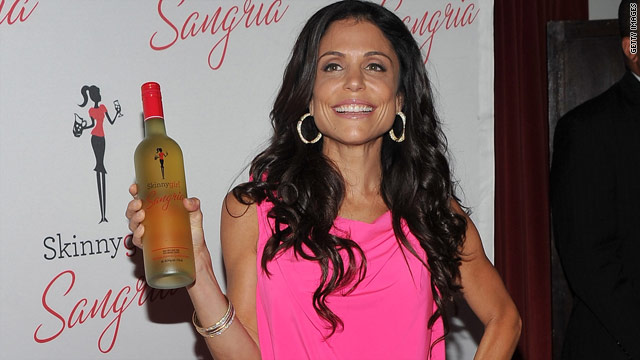
Skinnygirl Wines Pulled From Whole Foods

I don't know why, but I hear so many things about the Skinnygirl brand these days.  Apparently, some women swear by it.  (Personally, I've never found these enjoyably good...)  But when I heard the bad news about the product pulled from Whole Foods, I thought it was worth sharing... only to point out just how interesting the whole "natural" foods marketing extravaganza really is.

As for sodium benzoate - it's a preservative that is actually used in many fruit-based beverages as well as other food products.  It inhibits bacteria and fungi from growing in anything that would support such growth: typically fruit-based beverages that would be shelf-stable (i.e. those fruit drinks that you buy that are not in the refrigerated section).  It's also found in vinegar, sodas, pickles, jam/jelly, and condiments. 

Skinnygirl Margarita
(Photo from Google Images)

This article was originally published by The Marquee Blog.  It is pasted here for your convenience.

Bethenny Frankel's Skinnygirl line pulled from Whole Foods

Bravo star Bethenny Frankel’s Skinnygirl cocktail line has been pulled from Whole Foods, according to Access Hollywood.
Apparently the ingredients aren't "all natural," like the bottle claims. Jill Zarin must be having a field day with this.
"After discovering that [Skinnygirl Margarita] contains a preservative that does not meet our quality standards, we have had to stop selling it," said the natural and organic grocery chain in a statement.
Frankel’s cocktail line is comprised of low-fat, pre-mixed drinks that the reality star touts as full of “natural flavors.” And the website says "no preservatives," but a rep from Skinnygirl told TMZ, "Skinnygirl Margarita contains very low levels of sodium benzoate (a preservative) so it can stay on the shelves."
"We understand their [Whole Foods] position and we respect that," the Skinnygirl rep told TMZ.
As for Frankel, she tells Access Hollywood, "I'm not making wheatgrass here. If I could put an agave plant and some limes on a shelf I would. [The Skinnygirl Margarita] is as close to nature as possible, while still being a shelf-stable product. ... We were bound to piss someone off and everyone loves to try to tear down a success. This is a non-event. I haven’t lost even a wink of sleep.”
Frankel recently sold her Skinnygirl empire for a reported $120 million.
Bethenny Frankel's Skinnygirl line pulled from Whole Foods
Bethenny Frankel & Skinnygirl
(Photo from article)

Friday, September 2, 2011

Friday Wine News You Can Use: Top Ten Differences Between Napa and Sonoma Valleys

I saw this on one of the recent 2011 wine blog winners... Fermentation: The Daily Wine Blog, and thought that it was actually worth repeating here.  I have had many people ask me about where to go and what to see when they visit "Wine Country" in CA.  This pretty much sums up the differences between the 2 valleys that are (literally) right next to each other!  (Although I'd have to say, I'm a bit biased to the wonderful charm that is Calistoga - spend a few hours on Lincoln Ave. looking into the little shops, eat at one of the local restaurants, check out the farmer's market if you're there on a Saturday, visit the geyser, climb Mt. St. Helena, stop by some of the local wineries, check out some of the spas... I love this little town, and miss it dearly.)

Regardless, if you'd like to visit some day... here's a good view of what "just is."  :)  Cheers!

Chateau Montelena, Napa Valley
(Photo by author)

Napa Valley, Calistoga End
(Photo by author)

Marimar Estate, Sonoma County
(Photo by author)

Sonoma Valley, Southern End
(Photo by author)

This article was originally posted on Fermentation: The Daily Wine Blog.  It is posted here for your convenience.

TOP TEN DIFFERENCES BETWEEN NAPA VALLEY AND SONOMA VALLEY
by Tom Wark

Having lived both in Sonoma Valley and Napa Valley, I've developed some opinions and observations about these two very different but neighboring wine country locations. The visitor to the region should be aware of these differences if only to be prepared to appreciate each valley for its uniqueness.
1. Napa Valley is a Wine Disneyland, while Sonoma Valley is a Wine Region
No getting around this. Napa Valley is all wine all the time, while Sonoma Valley is all wine. There's a difference. That primary difference is that the winemaking and grapegrowing work in Napa is done with an eye equally trained on appealing to visitors. Sonoma Valley's winemaking and grapegrowing is done only a wink at tourism.
2. Napa Valley's provision of and commitment to supporting fine dining establishments exceeds Sonoma Valley's by a wide and deep margin
There are some wonderful restaurants in Sonoma Valley. Yet, the sheer commitment to fine dinning in Napa Valley boggles the mind.
3. Navigating traffic in Napa Valley is a chore while navigating it in Sonoma Valley is inconsequential in comparison
Traveling north on Highway 29 in and around St. Helena at the wrong time will make most people lose their appetite and quite possible their temper. Worried about getting up and down the Valley in Sonoma? Why?
4. Sonoma Valley has better backroads than Napa Valley
Bennett Valley Road, Warm Springs Road, Carriger Road, Lovall Valley Road, Moon Mountain Road, Trinity Road, Lawndale Road
5. Sonoma Valley wineries provide a wider selection of wines than Napa Valley wineries
There is not sense in heading to Sonoma Valley to taste Cabernet when Napa Valley is right over the hill. However, in Sonoma Valley you are likely to find a much wider array of varietals to taste than in Napa. Sonoma Valley simply hasn't committed to a single varietal like Napa Valley has.
6. The lodging establishments in Napa Valley are more sophisticated, provide more amenities, and are better placed than in Sonoma Valley
Despite three or four fine hotels and establishments in Sonoma Valley, the lodging establishments in this valley pale in comparison to the choice, diversity and pleasure of those awaiting visitors to Napa Valley.
7. Napa Valley provides a much greater array of activities for visitors than Sonoma Valley.
Although Napa is pretty much all wine all the time, you can find opportunities for soaring over the Valley in a balloon, numerous outstanding spas, golf courses, shopping areas, and more in Napa that simply have no equivalent in number in Sonoma Valley.
8. The shopping/strolling/relaxing experience of the Sonoma Town Plaza is much more pleasant than that of St. Helena or Yountville or Calistoga or Napa.
The large Sonoma Plaza is old school charming in a way Napa Valley's town centers (such as they are) simply can't compare with. One can easily spend three or four hours strolling the Sonoma Plaza, dipping into shops, hanging in the tree-studded plaza, eating, and even hitting the side streets east of the plaza for a look at old, well-kept homes. Nothing like this experience exists in Napa.
9. Sonoma Valley is bucolic, rustic and inviting while Napa Valley is sophisiticated, well-appointed and business-like.
It's about the "feel" of things. Napa is far more sophisticated a feel than in Sonoma. Yet Sonoma provides the visitor with the sense that they are wandering through an authentic and more rustic environment. To each their own.
10. Sonoma Valley is much less expensive to visit than Napa Valley
It just is. I can't nail down the exact difference. But I'd bet a 4 day stay in Napa Valley would cost at least 30% more than a 4 day stay in Sonoma Valley.

Thursday, September 1, 2011

Modernize Your Home with Wine Furniture

While doing some other searches, I came across this website, Trade Direct Buy that featured a lot of really neat wine furniture.  I don't know anything about the company, but I thought I'd share some of their pieces here.  Regardless, maybe it will give you some ideas

Tree Bottle Holder

Barrel Wine Rack

Half Barrel Bistro Table

They call this a "Coffee Table" but I see it more as a TV stand...

Canoe Cabinet

Bistro Table

Barrel End Table

Barrel Sink

Foyer Table with Wine Rack

Table for a Breakfast Nook